
I agreed to spend a week at our district youth camp this Summer serving in numerous capacities, but one of the main one was as the “AV Guy”, handling the video & sound needs from the back of the room during our worship rallies. I love this role!

This year I happened to receive an invite to the music service, Spotify, just a few days before camp began and I instantly knew that I would be using it during our week of camp. During pre-rally times and during some of our events that take place in the tabernacle we oftentimes play music in the background to keep things flowing. This music is usually stored on one or more computers that we plug in and out of the sound system throughout the week.

This year we used Spotify. Spotify is a “cloud-based” music service and allows playback of millions of songs from their HUGE library! The service can be logged into from any computer with Internet-access and can get you streaming music from their library in a matter of moments!

For $4.99, we upgraded to Spotify’s “Unlimited” plan for the week. This was a month-long subscription, and I was able to easily cancel it after camp. This plan offered us NO advertising interruptions, which helped because we were playing songs one right after the other with no break. (I think with the FREE version, I experience a 15-30 second advertising once every 5-10 songs)

The big bonus for using Spotify at camp was asking for student-input into our camp-week playlist! I would grab student after student and ask them what artist and/or song they would like to have added to the playlist and was almost-always able to oblige because of Spotify’s huge library of music! Our playlist for the week offered songs from Toby Mac, Owl City, and dozens of others to attempt to satisfy the tastes of our 100+ students and leaders gathered throughout the week. I was continually impressed that Spotify had many of the Christian-artists that we wanted to add to our camp playlist.

If you haven’t yet joined Spotify, you’re not alone – they’re still limiting the number of users here in the U.S. and invitations are few and far between. The two that I was given a few weeks ago were gobbled up quickly via my offer on Social Media. Even without an official invitation, you can head to Spotify.com and enter your email address to be notified when they are accepting new members!

Also, be sure to check out some of Spotify’s features (even before you sign up) to know how it works and how to make it work best for YOU!

On Thursday and Friday of this past week, our family was thoroughly entertained and amused at DelGrosso’s Amusement Park in Tipton, PA. I managed to capture a few of our amusing moments on camera and put together a quick video highlighting some of our good times:

This morning we made the 2+ hour trek from Shippensburg to Tipton, PA for our annual district pastoral families picnic at DelGrosso’s Amusement Park. Last year was our first time at the picnic since coming into this district and we had an absolute blast. Today was no different – a GREAT time was had by all!

A quick slideshow from the day:


View all of the pictures from today here.

I went fishing with my buddy Jim today. Jim is a banker. I know it’s not cool to talk about work while not-working, but it tends to happen. Today we briefly talked about the pickle we’re in as a country with our debt crisis, credit score, etc. It’s not a positive outlook to say the least.

I also stumbled upon this video just this afternoon that helps to explain things in a way that makes sense to me:

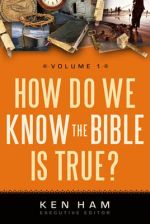
I recently discovered and quickly read through the latest offering from Ken Ham, “How Do We Know the Bible Is True?”

I was impressed with the book and managed to highlight more than 150-passages from it for future reference!

It is available in paperback, or my-preferred edition as a Kindle ebook.

In 28 chapters, Ham & Hodges (editors & authors) seek to give some great information supporting Christian apologetics. Each chapter is written by an author who brings authority on such subjects as whether the Old and New Testaments are reliable, how we should interpret Scripture, and whether there are contradictions in the Bible.

In the book, Ham and Hodges remind Christians of the continuing trend to remove the Bible from its God-given status as Holy and Inspired and sadly accept the words of fallible men and women who attempt to undermine its authority.

Some of what I highlighted in the book:

Over the decades, millions upon millions of Americans, one person at a time, have been indoctrinated to believe in the idea of evolutionary naturalism and millions (billions!) of years and thus to doubt and ultimately disbelieve the Bible as true history.

Each subsequent generation has become more firm in the belief that if the first part of the Bible (which is the foundational history for all Christian doctrine, including the gospel) is not true, how can the rest be? Biblical authority is undermined, the Bible’s credibility is destroyed, and the Christian influence in the culture is eroded.

We need a new reformation in our churches. Christians need to be figuratively nailing Genesis chapters 1–11 on the doors of churches and Christian colleges/seminaries, challenging God’s people to return to the authority of the Bible.

C.S. Lewis stated, “The art of inventing little irrelevant details to make an imaginary scene more convincing is a purely modern art.” He added, “As a literary historian, I am perfectly convinced that whatever else the Gospels are, they are not legends. I have read a great deal of legend and I am quite clear they are not the same sort of thing.”

It is increasingly difficult to understand how Christians, who believe in the New Testament miracles of Jesus, fail to believe the miracles of the creation week in Genesis.

If we distrust God’s Word in Genesis, then we will be inconsistent in how we interpret the Word of God and will have a tendency to distrust other portions of Scripture.